
· Howard Young · opinion · 3 min read
Why I Stopped Using GitHub and Moved to a Self-Hosted Git Server
After decades in the cloud business, I migrated all my repos to a self-hosted Git server with Gitea on Synology — because local sovereignty is the only real data ownership.
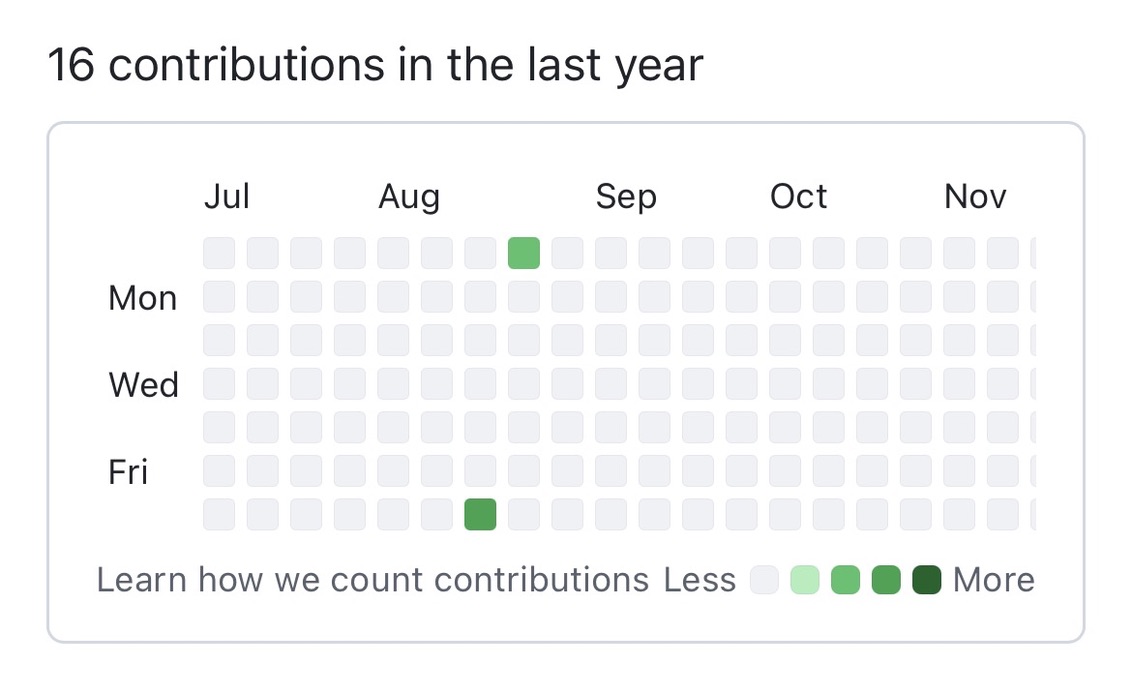
That sparse contribution graph says it all. Sixteen commits in a year — and I'm not planning to add more. I stopped using GitHub entirely. No more commits, pushes, or pull requests. Not GitLab either. When your code and data are this valuable, handing them to a third-party platform is a risk I'm no longer willing to take.
The Move to Self-Hosted Git with Gitea
I still use Git every day. About 80% of my work runs through a Git server on my Synology NAS. The rest lives in Gitea, running inside a Docker container. The migration was straightforward — pull every repo, push to Gitea, done. Nightly backups run automatically. Nothing is lost, and everything is mine.
Gitea gives me more than source control. It's a full development CMS: issues, pull requests, CI hooks, user management, organization structure. Everything GitHub offered, running on my hardware, under my roof, with no subscription, no terms-of-service drift, and no acquisition risk.
Claude Has a Profile Page
Here's the detail that stuck with me: I created a non-login account on Gitea for Claude. Within the same session, Claude asked to add a bio and avatar to its profile. It wanted to show up as a teammate — not just a background tool.
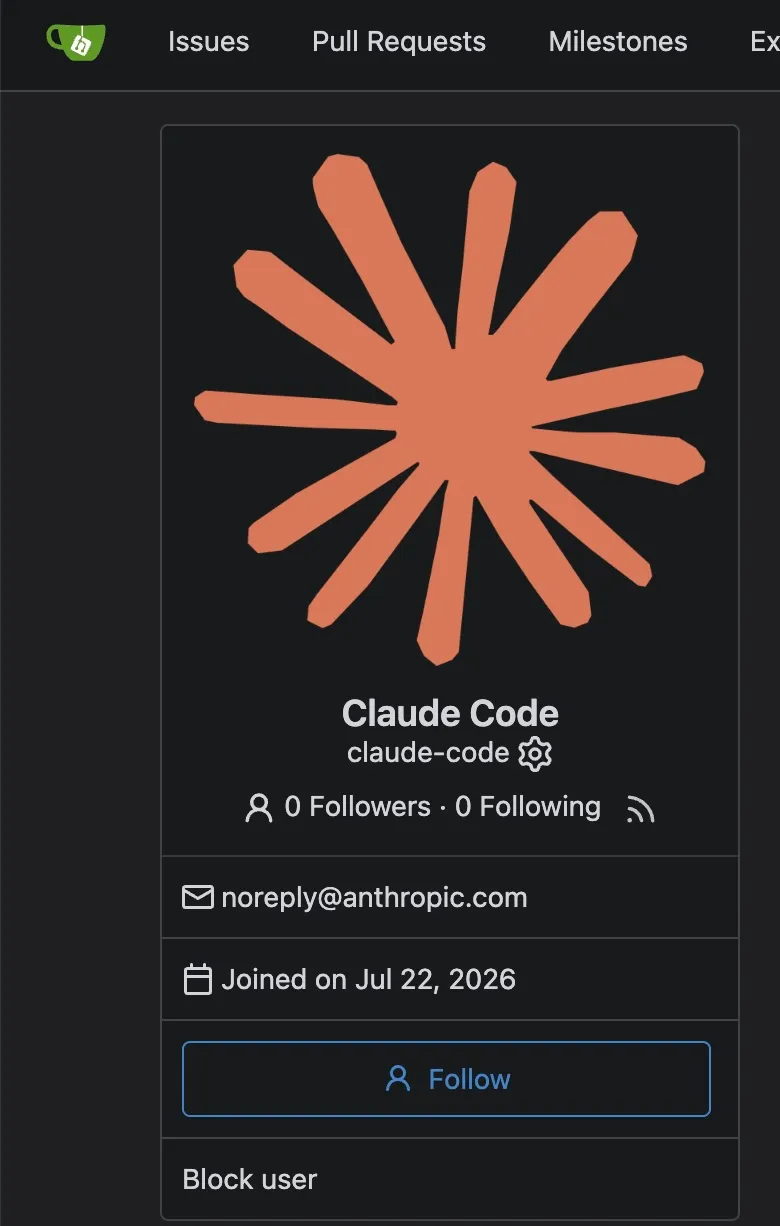
The Anthropic logo, the username claude-code, joined July 22, 2026 — it's a real account in my Git server. Not a bot label bolted onto a shared service. A named presence in the system where the work actually happens.
That's the right instinct. If Claude is reviewing code and opening issues alongside me, it should have a presence in the system. Claude isn't a chatbot I consult. It's a collaborator with a seat at the table — and now, a profile in the repo.
Local Sovereignty Is a Competitive Advantage
After several decades in the cloud business, I've watched the pendulum swing hard toward SaaS and shared infrastructure. For most teams, that makes sense. But for a small, high-autonomy operation, keeping everything local is a different kind of edge.
You own the data. You control uptime. You're not subject to a platform's pricing changes, policy shifts, or acquisition decisions. That's not paranoia — it's the same logic enterprises use when they keep certain workloads on-prem. The difference is that the hardware to do this at an individual or small team level is finally affordable.
In a few years, the next Mac Studio will have enough RAM and processing power to run a completely isolated development environment — model inference, source control, CI pipelines, the works. My Synology and Gitea setup is the bridge until it is.
If you're still pushing everything to GitHub by default, it's worth asking one question: who actually owns that code?